
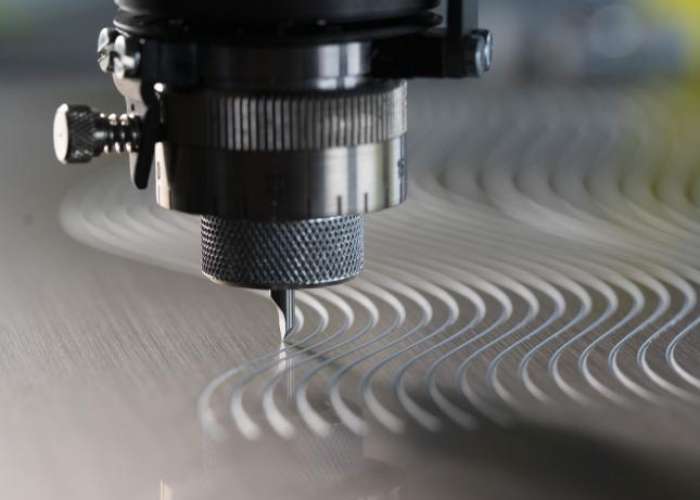
Mechanical engraving is a process that uses a rotating cutting tool or a sharp engraving bit to physically remove material from a surface, creating text, images, or patterns. It’s a subtractive manufacturing method, meaning it carves or cuts away material to create a design.
Mechanical engraving is a classic, hands-on method of permanently marking materials by cutting into them with a sharp tool. It works by using a spinning cutter to carve designs, logos, or text directly into surfaces like metal, plastic, or wood.
Excellent for hard and reflective materials that lasers might struggle with.
Produces clean, sharp lines with noticeable depth.
Ideal for applications where long-term wear resistance is needed.
Tough & Long-Lasting: The engraved marks are deep and built to last—even in harsh environments.
Mechanical roll engraving (also called roll-to-roll engraving or rotary cylinder engraving) is a specialized form of mechanical engraving where designs are engraved onto a cylindrical roller. This roller is then used to emboss, imprint, or texture materials in continuous rolls or sheets. It’s common in high-volume manufacturing and decorative applications.
Here are the main products and applications that can be made using mechanical roll engraving:

An engraved roll (usually steel or chrome-plated) is used to press or roll a pattern onto another material. It’s ideal for repeating patterns, textures, or high-speed production of consistent surfaces.
With years of experience in mechanical and rotary engraving, we deliver precision, durability, and customization across a wide range of industries. Whether you’re looking for deep-engraved metal nameplates, textured rollers for high-speed production, or branded components that stand the test of time, we offer high-quality solutions tailored to your needs.
Let us help bring your project to life—with craftsmanship, accuracy, and a commitment to quality that speaks for itself.
510, Colonnade-2, B/h. Rajpath Club, Bodakdev, Ahmedabad-380059.
+91 9898898046
+91 9898898023
Contact us today to discuss your requirements or request a free quote.